I was preaching preparedness to firearm owners for the past 10-20 years.
Will gun owners learn from covid & get better with planning and readiness?
As result of Covid 2020-2022:
All across America there are thousands of new gun owners
depleting normal national inventories, bringing about gouging,
and produces more uncertain, inexperienced firearm owners.
Absolutely pray that individuals be smart, careful and thinking
of those around them and beyond what is seen at the moment.
Irresponsible individuals will bring blame upon all gun owners.
|
December 2021 : Clear importance and value of ammunition

AS ALWAYS, WHY DID PEOPLE PROCRASTINATE??
Half the people who call or stopped by said themselves that they could've / should've
gotten permits to acquire 10-12 months ago or secured guns and ammo before Covid.
AND SAME OL PROCRASTINATION BULLSHIT THE PUBLIC PUTS THEMSELVES IN
even after everyone SHOULD HAVE LEARNED from 12 years of prior presidential terms.

As we are in the middle of the Pacific Ocean, freight orders of ammo and pepper spray
take 3-4 weeks via boat. Commonly needed calibers are always sold out at distributors.
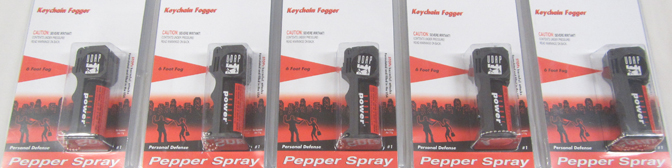
Wake up people! Support local gunshops regularly . Crucial: HELP THEM HELP YOU-
' strengthen and build up your supply chain ' - unexpected predicaments like this
are going to occur in the future with suspicious frequency and gunshops are the
only way you'd be able to secure firearms, ammo and support. If you neglect the
established gunshops, then you will see an increasing difficulty getting guns and
gear needed for self protection / teaching / enjoying America's valuable gun rights!
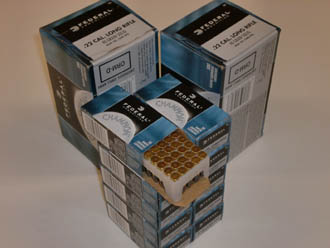
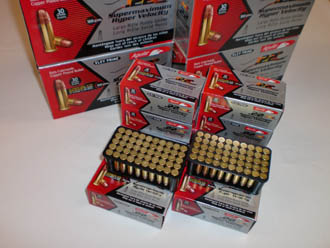
September 2022 : Clear importance and value of ammunition
Many have firmly resolved & told me they are continuing to secure ammo;
never want to be caught again without comfortable backup supply of ammo!
I was preaching preparedness to firearm owners for the past 10-20 years.
Will gun owners learn from covid & get better with planning and readiness?
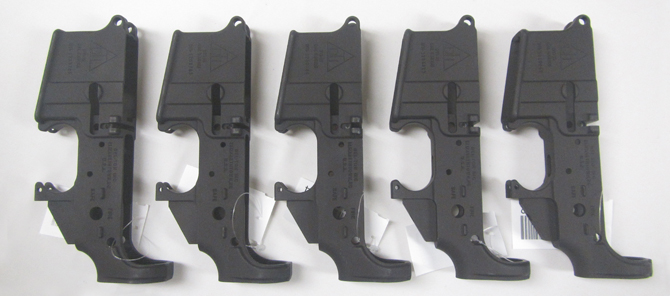
Important, valuable priorities: before political agendas limit your ability to get such items...
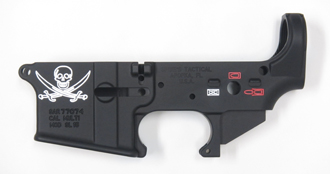
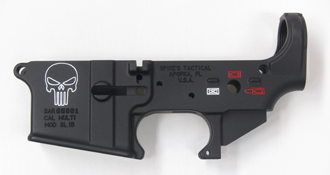
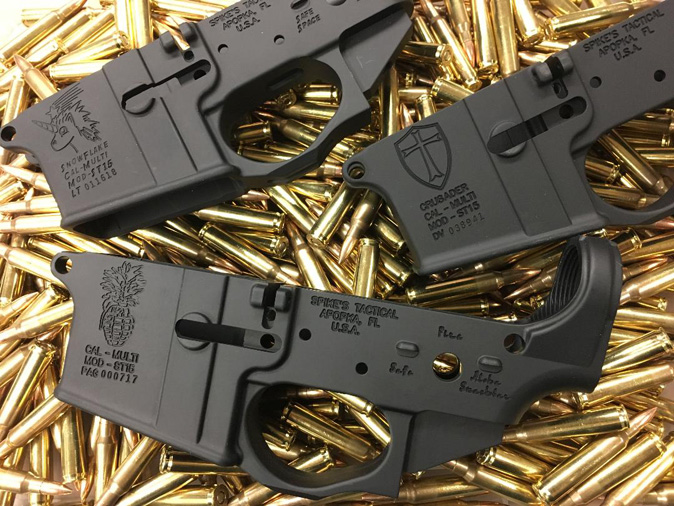
AR-15 stripped lower receivers continue to be a smart commodity to secure.
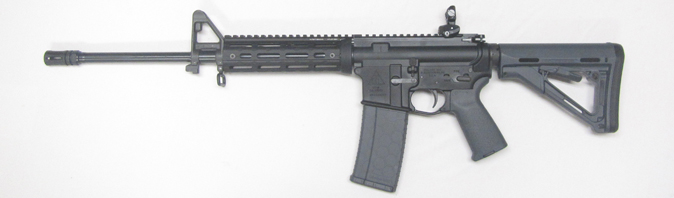
Anti-gun legislators and the misled public want to limit your firearm and accessories acquisition and ownership along with restricing locations where you can enjoy guns
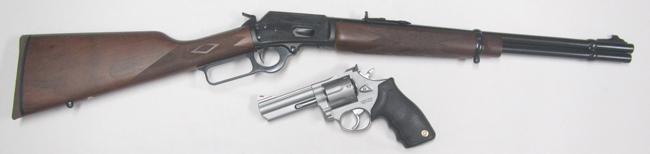
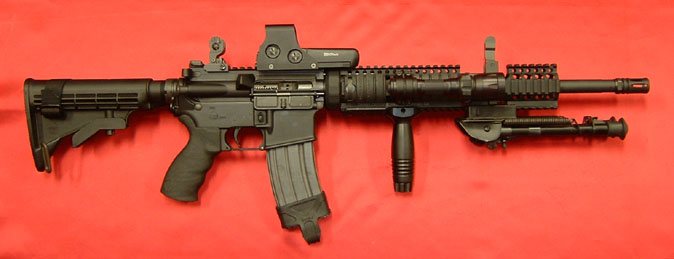
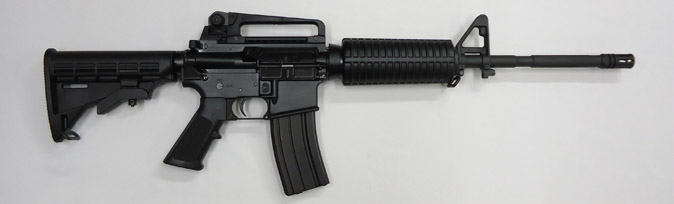
Make no mistake, they want to restrict basic, manual operation classic firearms like these too!
ALL THIS WAS WRITTEN AND POSTED HERE FROM JANUARY 2020.
AND NOW, JAN 2021; WHAT WAS I PREACHING HAS PROVEN TRUE
Physical firearms inventory for a brick and mortar storefront surpasses
pictures and delivery claims of guns and products merely seen online!
Shipping ain't free. Transit times are reality. Additional costs are a fact.
Want to ensure your continued ability to ask about & handle firearms?
Buy LOCAL!
Visit the store. See guns, accessories, equipment, demos and samples
- physical inventory - proceed thru the requirements for gun ownership
and carry on. Don't argue or oppose the procedures; you want guns??
Don't procrastinate, do what needs to be done and get your items NOW!
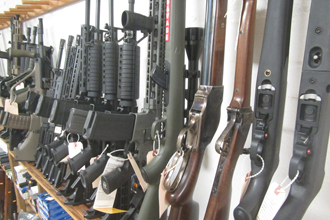
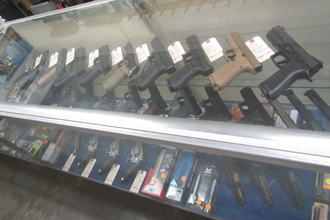
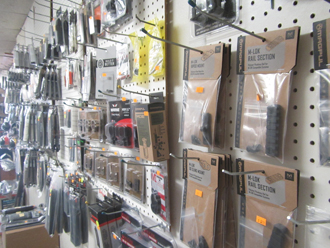
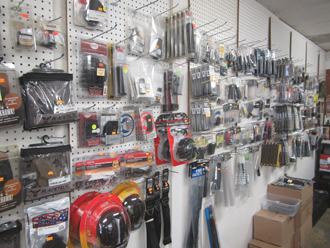
Heed this warning: unstoppable measures are in the future.
Be vigilant. Be prepared for the evil and undesirable occurence.
Want to protect yourself, family and loved ones?
Interested in shooting sports or collecting firearms;
preserving and building up on valuable investments
that you, friends or family already own? Get active
in firearms, prioritize and secure guns & parts now
before divisive politics and social media influence
more of the United States which will drive anti-gun
sentiment into votes; irreversible restrictive laws.
Learn facts, start permit process and get moving!
There will be election developments before you know it;
costs will rise & time spent on procedures will increase!
|
Anti-gun antics of media and corporate America are advancing,
and restrictive firearm laws continue to develop worldwide.
And given a life-threatening situation,
mere words or emergency phone calls
won't stop an attacker's ferocity / actions / intent
in commiting crimes to injure or kill an individual!
Bad people will do bad things.
Restricting or disarming good people will not stop the bad.
Priority list for firearms and support items:
[prioritize these to avoid panic and frenzy when any political adversity hits]
Semiauto military rifles: secure what you can now!
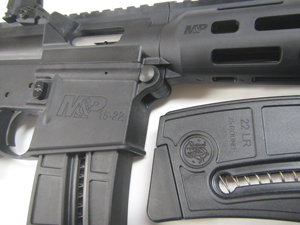
Viable defense tool (primary or supplementary) can be S&W M&P15-22 rifles
.22cal S&W M&P15-22 rifle (2 if possible) - vital to teach/practice/enjoy
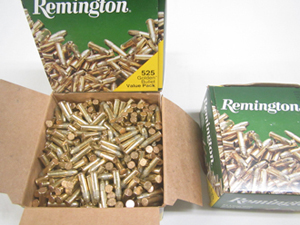
1k to 2k+ rounds of .22lr, secure and use a variety of rimfire cartridges
ALL THIS WAS WRITTEN AND POSTED HERE FROM JANUARY 2020.
AND NOW, JAN 2021; WHAT WAS I PREACHING HAS PROVEN TRUE
Rifles for defense:
Regardless of opinions and misled views, AR-15 5.56 system has always been
the logical, decades-proven answer for many reasons; not a popularity contest!
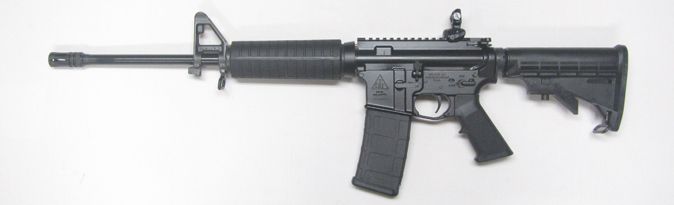
[...also, you can build up an AR utilizing separate upper and lower halves...]
5.56cal AR-15 rifles {budget? consider 2@ $700 each; not 1@ $1,400 or higher!}
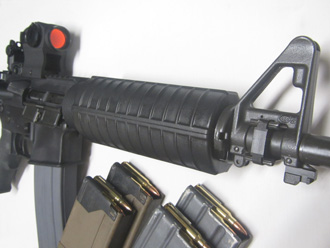
1k to 2k rounds of FMJ and 100rds defense HP or SP ammo for each rifle
6 to 12 mags and essential spare parts kit for each rifle
a few (3 or 4) AR-15 stripped lower receivers and LPKs
Handguns for defense:
Prioritize simple, polymer-framed, striker-fired 9mm guns - their mags & ammo -
vital spare parts - then duplicate a second identical setup (good idea for couples)
Serious defense plan for a household with two adults: get two!
Same caliber, mags, operating system - that's the best solution!
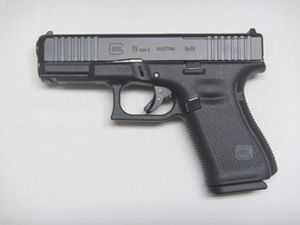 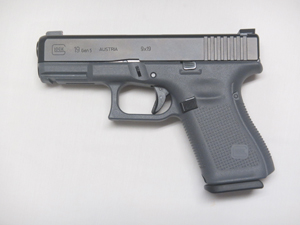
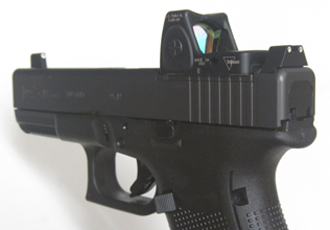
G19 Gen5 Modular Optic System G19 Gen5 distr exclusive Gray Frame
9mm striker-fired polymer-framed defense pistols {ideally 2 Glock 19 or 17}
1k to 2k rounds of FMJ and 100rds defense HP or SP ammo for each pistol
6 mags and essential spare parts kit for each pistol
ALL THIS WAS WRITTEN AND POSTED HERE FROM JANUARY 2020.
AND NOW, JAN 2021; WHAT WAS I PREACHING HAS PROVEN TRUE
Introduced January 2020: Glock model 44, their dedicated .22lr pistol
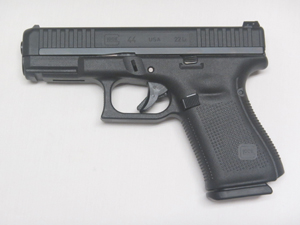 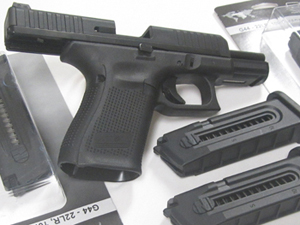
Secure 1K to 2K rounds of .22 rimfire ammo and have 6 mags per .22 pistol
Another great choice: reliable and incredibly cost-effective Taurus TX22 pistol
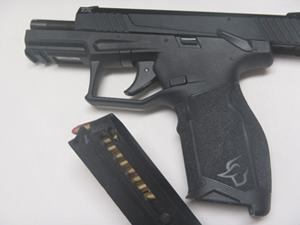 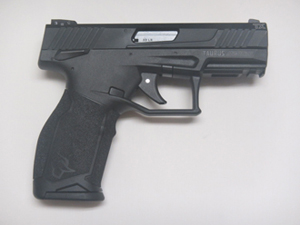
Secure 1K to 2K rounds of .22 rimfire ammo and have 6 mags per .22 pistol
September 2022 : Clear importance and value of ammunition
Many have firmly resolved & told me they are continuing to secure ammo;
never want to be caught again without comfortable backup supply of ammo!
Important necessities will include carry cases, range bags, cleaning gear,
more ammo, parts, mags, proven dedicated lights for defense {Surefire},
and then consider optional / particular-personal-taste / niche firearms ....
Having duplicates and extras of common, widespread, standard issue
firearms is the answer - for emergencies, teaching others quick, barter
or trade; advantage of liquid assets! Firearm type, ammunition caliber,
operational standards, replacement parts and magazines take priority!
Unique, 'one-of' or overly-specialized tools in a typical crisis is foolish.
* * * * * * * * * * * * * * * |
Bring family and friends up to speed on firearms familiarization,
usage, confidence level - make it a regular, consistent way of life.
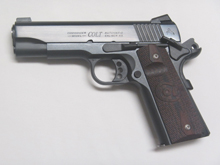
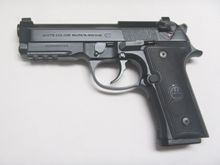
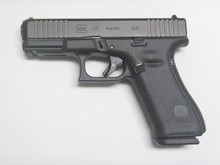
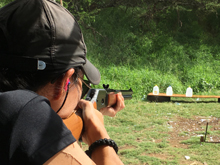
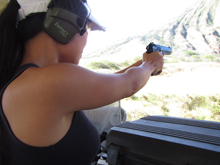
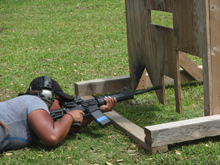
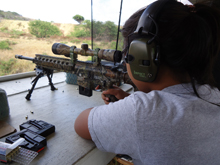
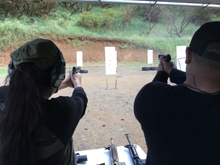
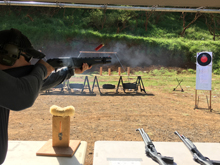
and build up physical conditioning too; Hawaii is perfect for this!!

Traverse the mountains - incredible beauty within minutes in the islands
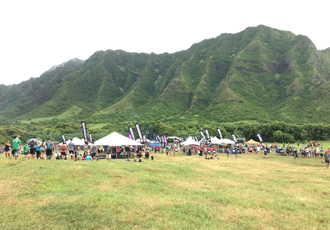

Engage in annual Spartan races Hike an endless variety of trails


Take to the water; infinite sights to see and ocean activities to enjoy
Did people need tragedies or anti-gun actions to rudely wake them up?
Over the last few years, tragedies have increased. Most notable since January
there's been renewed political attacks and finger pointing at rifles like AR15s.
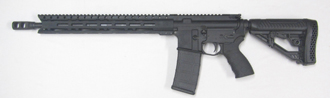
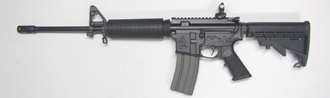
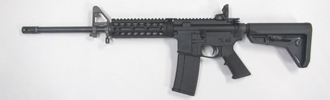
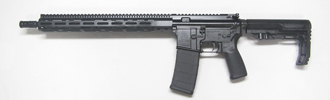
Right now, proper focus for those who considered prioritizing firearm purchases
should be directed toward AR15 type rifles, lower receivers, mags, & spare parts.
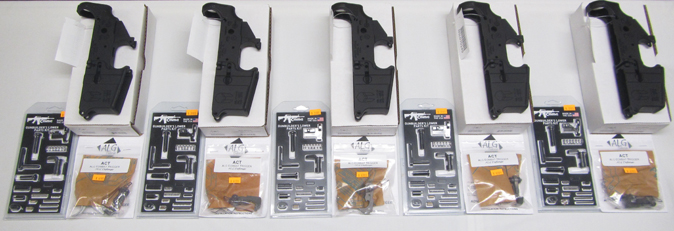
Get vital firearms, parts, ammunition & accessories now, before real issues begin!
THE ABOVE WAS WRITTEN AND POSTED HERE FROM JANUARY 2020.
AND NOW, JAN 2021; WHAT WAS I PREACHING HAS PROVEN TRUE
I'll always recommend proven-track-record, quality products at reasonable prices.
Those who want the honest answers can rest assured I'd never steer them wrong.
As history progresses, smart and economically sound purchase decisions will be
the only clear answer. Most modern firearms produced 15-20 years ago will never
even maintain lofty investment value that may have been expected in the late 90s.
Consider what makes sense, especially for defensive purposes. Avoid glamour,
prioritize proven firearms and equipment. Buy items with purpose and not hype.
Be certain of good deals - you sure can if you get recommendations thru me!
As the years progress, many individuals are recognizing facts on what matters -
and finally securing what has always been the best choices in firearms / support -
especially considering budget / usability / parts availability / consistent gun value.
[ Glock ]
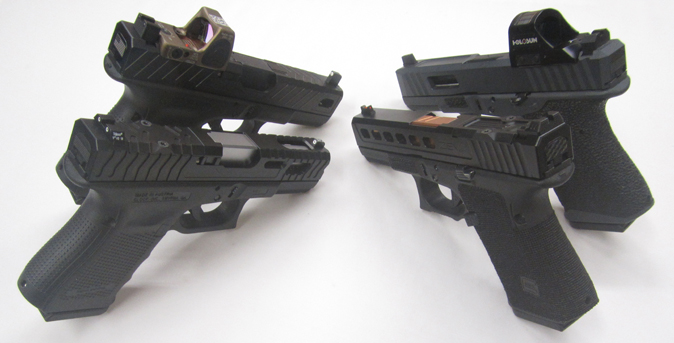
Semiauto 9mm pistol that is worldwide and will always have support:
Many models share same internals, and there's lots of performance & aftermarket parts!
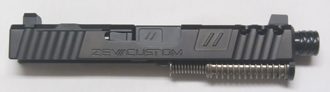
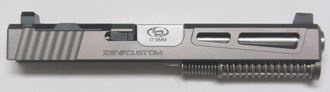
Zev Spartan slide+tall sts, Zev threaded barrel Zev Prize Fighter slide+tall sts, Storm Lake barrel
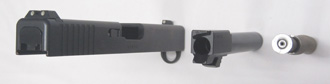
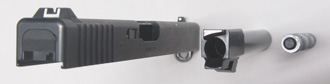
Glock slide+night sts, barrel, recoil spring assy Glock slide+standard sts, barrel, recoil spring assy
Everyone's got one or more of these handguns; all ought to secure more as it makes sense
and with the factory frame, one can switch out a multitude of 9mm/.40cal slides and barrels,
along with Advantage Arms .22cal conversion top ends; match up with correct caliber mags
and ammo - and rock on with the most survivable, versatile defensive handgun in the world!
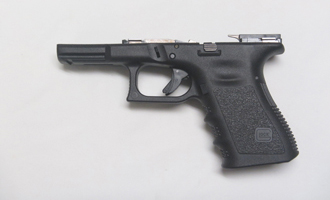
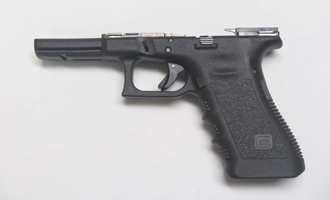
Glock compact model 19/23 frame Glock model 17/22/17L/24/34/35 frame
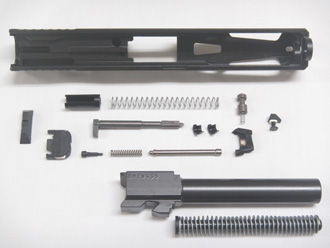
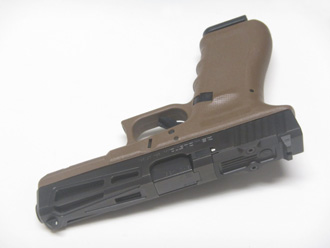
Zev limited Enhanced Prize Fighter slide w/ Glock factory internals - together on FDE frame
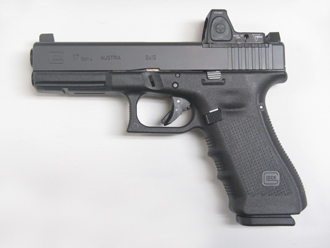
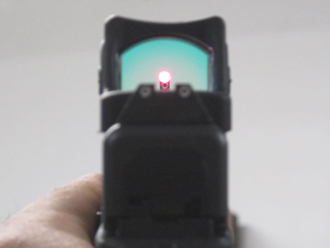
Barely a decade has passed since the advent of dot optics on pistols; savvy consumers knew
it would become commonplace in the US market. Now it is seen in use by many shooters.
All the writing in black & red text was written and posted here Jan 2020.
AND NOW, JAN 2021; WHAT WAS I PREACHING HAS PROVEN TRUE
More examples of combinations that can be had in the versatile world of Glock handguns
There will be increasing number of companies making models of slides, barrels, iron sights
performance parts and trigger units - many in various colors - easy to customize YOUR way!
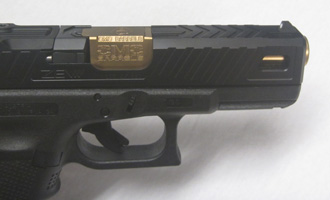
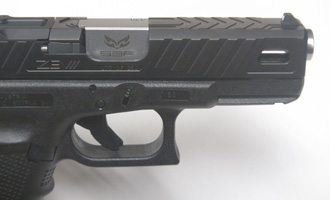
Zev limited Raven slide, CMC Bronze barrel Zev limited Raven slide, S3F Stainless barrel
Continue securing important firearm product categories, spare parts, ammo...
Consider items that will secure future desirability and steadfast resale values!
Be prepared for anything - even arising from the most unthinkable scenario.
.40 caliber pistols (and many in .45 caliber as well) are dead stock at many
distributors, even with lower sale pricing applied in hopes to get them sold.
Even 10+year popular pistols even in 9mm, once over $700, most often sit.
Absolute facts: 9mm works fine. PIstols with $1,000 price tags aren't mandatory to
send bullets downrange. A $500 pistol can accomplish the same task consistently.
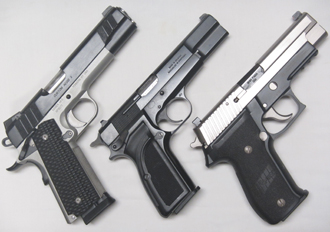
Kimber Aegis II Browning HiPower Sig P226
~ $1,250 ~ $1,000 ~ $1,000 |
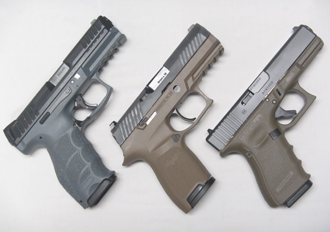
HK VP9 Sig P320 G19 G4
~ $700 ~ $550 ~ $550 |
I was preaching preparedness to firearm owners for the past 10-20 years.
Will gun owners learn from covid & get better with planning and readiness?
AR-15 stripped lower receivers continue to be a smart commodity to secure.
Important items are available
I do have inventory of crucial and overwhelmingly requested items in the shop;
do not procrastinate securing necessary items. Permit and 4473 required items
can be secured with payment and picked up later. Project parts & extra spares
for AR type lowers & uppers are priority with ammo. The run on AR rifles, mags
and lower receivers has been obvious along with with proven Glock handguns.
All the writing in black & red text was written and posted here Jan 2020..
AND NOW, JAN 2021; WHAT WAS I PREACHING HAS PROVEN TRUE
Professional tools that all adults should obtain and become very capable with!
What's crucial beyond equipment is our physical exertion and fighting ability -
all the guns, ammo and gear would only CYA in a fraction of deadly situations.
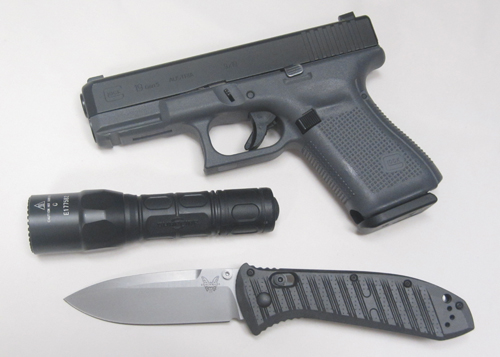
Glock 19 Gen5, Surefire G2, Benchmade Presidio II
|
The fact that Glock and specifically the model 19 has been officially adopted by
MARSOC and NSW proves what I have been saying for well over a decade and
is obvious that the firearms public has acknowledged the sensibility and clear
superiority of Glock's proven design for a reliable striker-fired defensive pistol.
( MARSOC: Marine Corps Special Operations Command NSW: Naval Special Warfare )
The Rangers also have officially adopted the Glock 19 Link: sf-goes-to-glock
marine-operators-choose-glocks-over-marsoc-45
navy-seals-switch-to-glock19s
report-fbi-selects-new-service-pistol
Year after year, I have been repeating the ethical, simple message;
get permits, get proven defensive firearms, accelerate teaching ability,
advance family and friends' ability, continue solid defensive training.
Avoid less-than-proven firearms and unneccessary accessories.
The good citizens in America do not have unlimited time.
What really matters for Americans in these times we live in
- Important supplies and emergency items to consider -
* * * * * * * * * * * * * * *
Important Safety Equipment
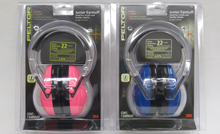
Peltor Junior earmuffs, $24 |
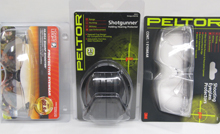
Safety glasses $10 Muffs $27 |
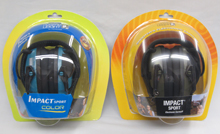
Electronic earmuffs, $75 |
Important Firearm Accessories
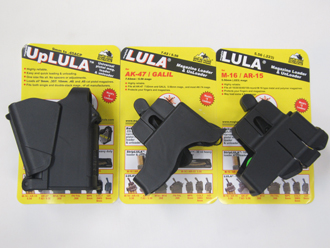
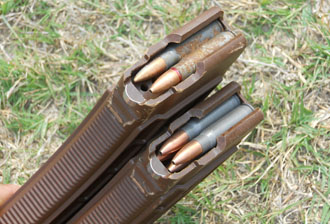
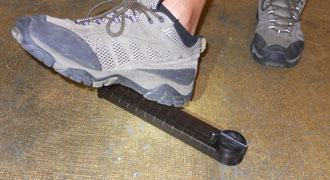
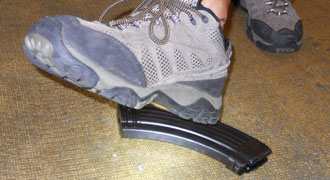
Magazine loading assist tools for pistols & rifles
(shown above: centerfire pistol, AK-47, AR-15)
more in stock, prices vary per model, $29 ~ $35 |
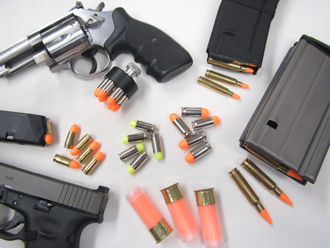
ST Action Pro action trainer dummy rounds:
loading/unloading/malfunction clearance drills
[prices vary per caliber and pack quantity] |
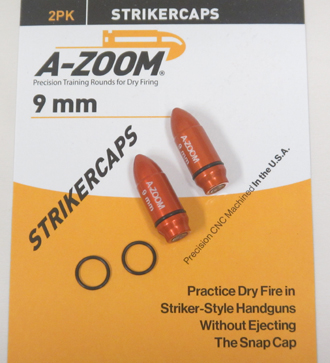
A-Zoom 'strikercaps' $10.50
how did they not produce this 10 years ago?
|
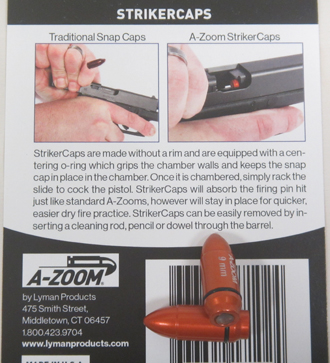
Ideal for vast numbers of striker-fired pistols
innovative; every gun owner needs these
|
Let's get the facts straight - current industry news and reality checks
Thankfully, more consumers recognize sensibility and agree on prior established facts.
.22 caliber guns are instrumental bringing up others to speed in shooting skill. Fun too.
.40 caliber is not a necessity. Continuously decreasing 'demand' and stats prove it.
9mm and .223/5.56 (and .22lr) are still the wisest calibers to secure as years continue.
Of course, a few extra (spare) guns chambered in those calibers make good sense too.
Those who use .40cal and want additional .40 pistols, check with me on distributor sales!
Increasing urgency: majority of people are concerned about personal/family defense tools.
Securing proven guns, ammo, mags and parts should be THE priority before deviating.
Best gun choices before going off track in the wide variety of guns that are out there:
9mm pistol: Glock 19 or 17 (no levers, striker-fired; teaching much easier, straightforward)
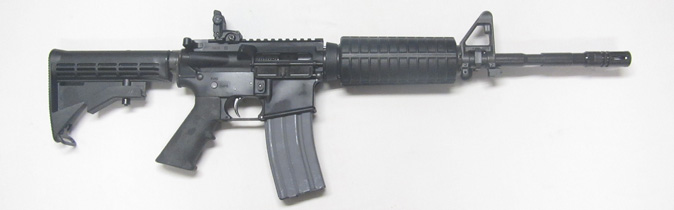
.223/5.56 rifle: any basic AR-15 (responsible adults need to be capable of operating AR-15s)
.22 rifle: S&W M&P15-22 (identical controls and operation as centerfire AR-15s)
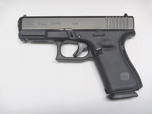
Get a Glock 19 9mm:
they are absolutely proven
and make compact sense... |
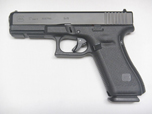
Also good: Glock 17 9mm
for a larger framed pistol and
in use all around the world... |
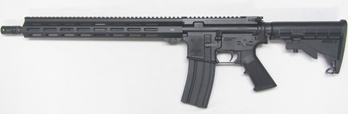
All kinds of AR-15 brands and models exist and perform well:
but most importantly are the most common military style rifle that
we all should know how to operate and troubleshoot in emergencies. |
Short list is not pricey nor glamorous but absolutely takes care of the defensive tools.
Ammo, mags, emergency parts would be next priority, and if budget allows, duplicate
the list to include two of each firearm and accompanying support items for each gun.
No need to chase unique/costly guns - it'll be staggering how much money is saved.
We can get other niche firearms after obtaining our most important defensive firearms.
Going the cheap, cheap route (alarmingly low priced firearms, inferior aftermarket items)
especially with continuing distressed sales on less ideal guns - should also be avoided!!
You can be certain I will not peddle questionable guns and accessories;
my standards are high for good reason - survivability of us and the gun!
Cost-effective and sensible lineup of firearms for defense and also
to introduce shooting to new people and build up their abilities...
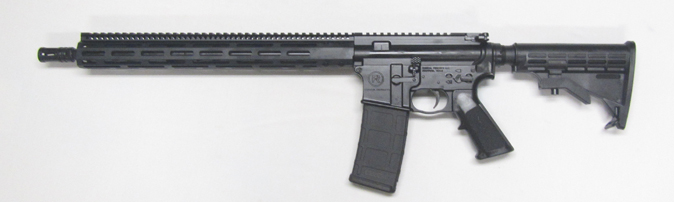
Budget priced AR15s like shown above can be found at good prices; around $850~$950
or can easily be put together from lower and upper receivers, basic furniture and barrels.
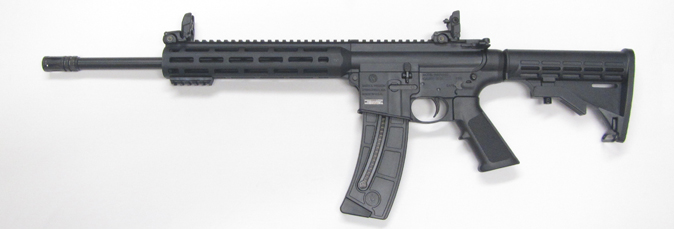
Smith & Wesson M&P15-22: dedicated .22 long rifle version of AR15; around $500
(outstanding reliability, same control layout makes it ideal when teaching new shooters)
All the writing in black & red text was written and posted here Jan 2020.
AND NOW, JAN 2021; WHAT WAS I PREACHING HAS PROVEN TRUE
Smart choices for proven defensive handguns:
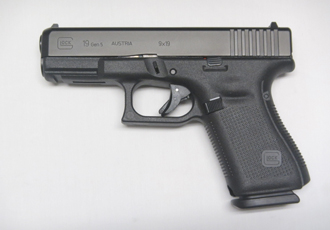
Glock 19
Gen5 models 26, 19, 17, 34 readily available
10/1/21: Glock inventory improving at distributors |
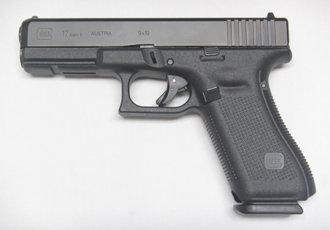
Glock 17
worldwide standard for striker-fired simplicity
10/1/21: Glock inventory improving at distributors |
Secure a minimum of 6 or more mags per rifle, 6 mags per handgun, cleaning gear.
Have a comfortable inventory of ammo 2000 ~ 3000 rounds per common caliber.
(additional necessities above are easily budgeted when not messing with unnecessary purchases!)
- examples of how money can be wasted on impractical thinking -
- examples of extra costs when accessorizing AR15s and AK47s -
* * * * * * * * * * * * * * * * * * * * *
What makes sense, is enjoyable and proves valuable beyond mere range usage?
Can guns be smart investments? Which ones would be most recognized and desirable?
If/when necessary, what could we legally trade/sell and benefit from that turnover situation?
AR-15 rifles and components are clearly, rightfully popular; here are some tips/suggestions
about what's good to secure on next purchases - whether we "needed another one" or not!
There's good deals on AR lowers+parts to build on; some featured on main inventory page.
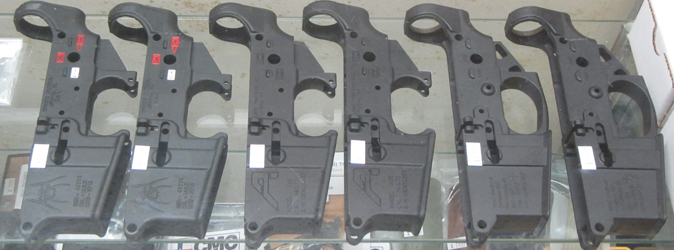
Smart decisions on what to procure include getting extra lower receivers. These have always been invaluable during times of political stress. Having some extra gives the gun owner valuable options!
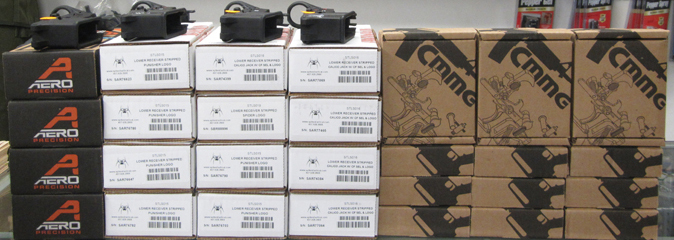
Along with stripped lower receivers, very smart liquid assets are lower parts kits and spare parts.
Having extra project lowers is the clear advantage for mil firearm enthusiasts.
Get these now; don't wait for frenzied politics and misdirected public outcry!
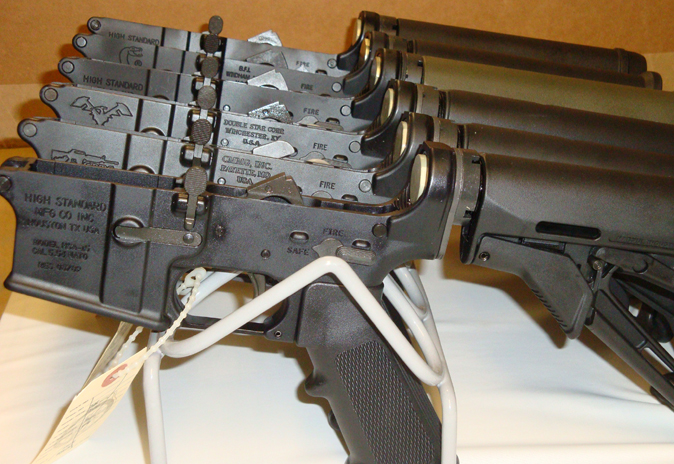
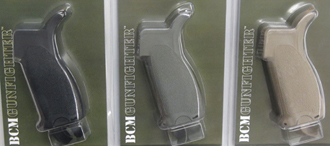
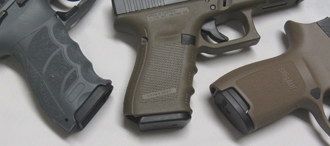
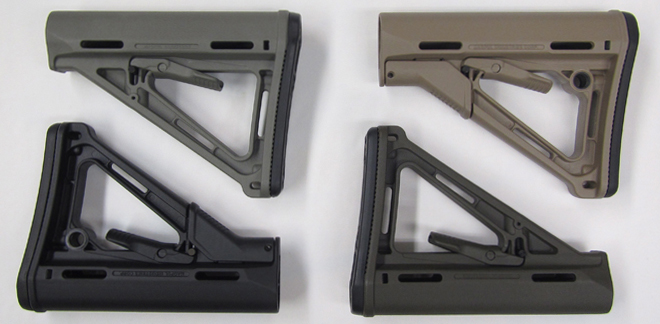
Finally, there are now refreshing varieties of colors available in the world of firearms
compared to the 1970s thru 1990s; nice to have variety with colors other than black!
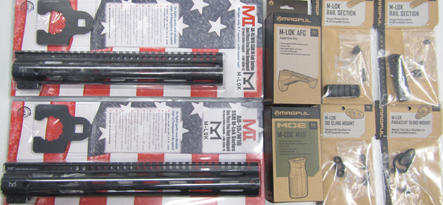
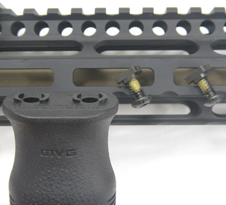
The best aluminum handguard meeting slim, modular and lightweight needs is the lineup from
Midwest Industries based on Magpul's M-Lok system. 12" and 15" lengths prove most useful.
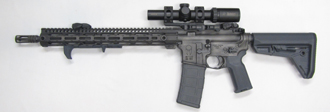
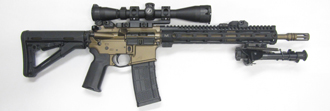
Example rigs above and much more displayed in the shop are there to see what is possible.
Don't give in buying diversionary 'cheap' firearms or equipment - quality product has a price,
and is always worth the cost vs wasting money on lesser items and having to re-buy later...
You can bet that things will happen in upcoming months to prompt anti-gun proposals and
many will have wished they secured AR lowers, defensive rifles, ammo, mags, spare parts.
All the writing in black & red text was written and posted here Jan 2020.
AND NOW, JAN 2021; WHAT WAS I PREACHING HAS PROVEN TRUE
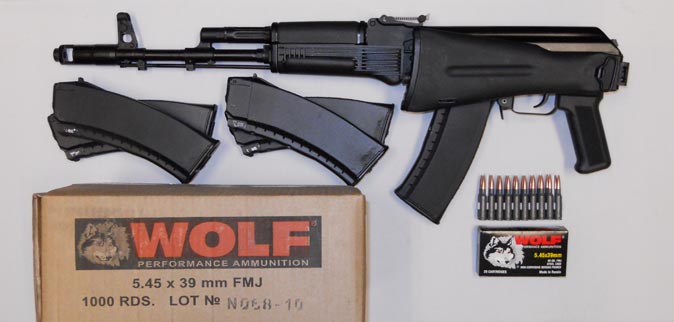
For those who insist or prefer; AK pattern rifles, parts, mags, ammo - smart to procure now
and save for a rainy day... before something goes suddenly awry in availability and/or price!!
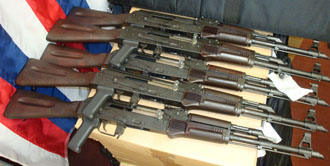
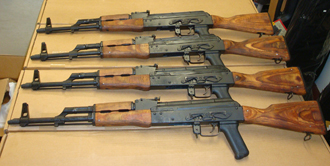
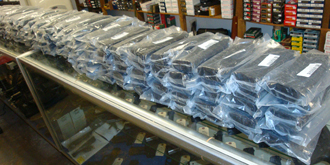
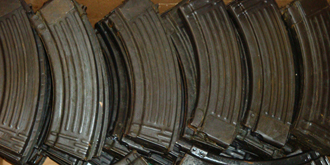
Be aware however, that many AK support parts and accessories have now risen notably in price
and are not all compatible. Consider facts, pros & cons thoroughly before jumping into the AKs.
[And there's AK variations/countries-of-origin that will be incompatible in pattern with other types.]
Have fun and teach others with .22 caliber firearms.
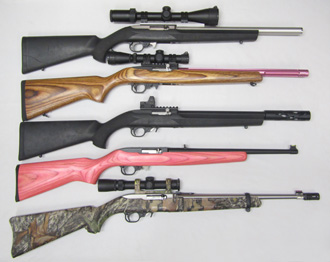
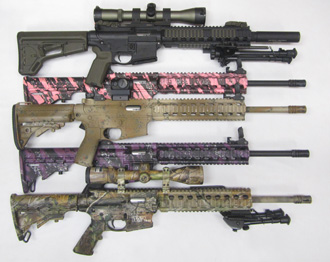
Ruger 10/22 rifles S&W M&P15-22 rifles
Forever popular and rightfully so; the Ruger 10/22 rifle. Also a clear winner: S&W M&P15-22 rifles.
There are so many ways to build up your teaching / fun .22 rifles; the best answer is to get several
rifles of same pattern - it'll be much easier bringing new people up to speed using duplicate guns.
Which guns would be good tools to conveniently dispose of 'out-of-spec' .22LR ammo?
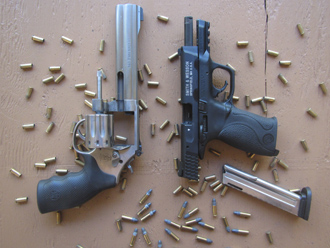
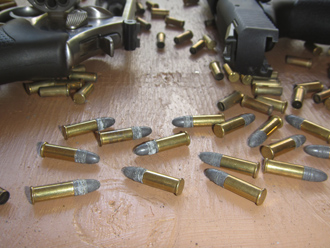
.22LR revolver (S&W 617 pictured above) could take care of the troublesome crusty .22
that may prove difficult-to-cycle in otherwise-normally-reliable .22 LR semiauto handguns.
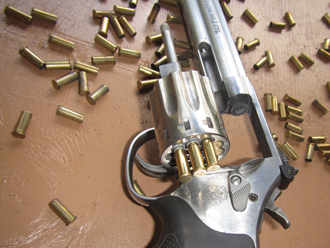
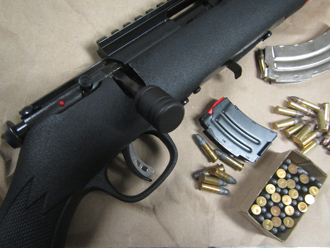
When revolvers don't cooperate in attempts to load cylinder, fire and extract, a Savage bolt
action .22 rifle will be a good choice for versatility and dispensing .22 projectiles downrange.
Centerfire defensive pistols and 9mm - have 'em, teach with 'em.
And here are the astounding reasons (gasp! say it isn't so! all the glowing words from volumes of
gun tabloids-magazines and wishful statements made since 1991 just don't work anymore) for the increasing acceptance for 9mm and for some, a circle right back to a caliber slighted all too often.
Personal protection with defensive handguns is priority; not hunting, not steel challenge matches.
1) Semiauto pistols are better choices; not revolvers. Repetitive ease of use and ammo in a mag.
2) 9mm will work. Hit what needs to be hit and repeat. Edge hits by any caliber are still peripheral.
3) Know that you may need to hand a pistol to another person - spouse, family member, partner...
Macho personal preferences for bigger .40+ calibers won't help their controllability or hit potential.
4) Coinciding with above: most simpler, proven sidearms are lightweight polymer 9mm handguns.
Therefore, the person(s) tasked to watch other sectors will have an easier time to cover your six.
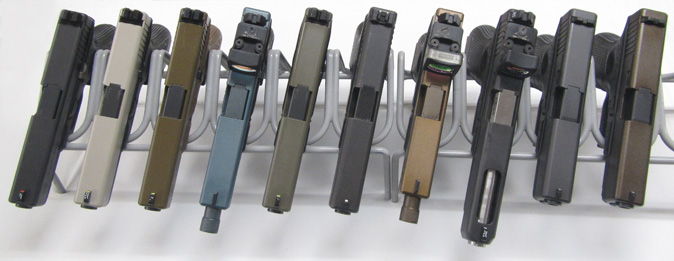
Have multiple same-manual-of-arms defense pistols. Teaching or emergency situations alike,
imagine how streamlined it will be (and safer!!) when accelerating others to basic knowledge
and operation of commonly encountered semiauto pistols without having to explain myriad of
different controls, levers, protrusions found on so many guns - all that really matters & keeps
it simple is trigger finger and muzzle discipline. No two different trigger pulls or extra controls.
What is practical?
Finally, finally it has been considered and heeded: my suggestions and the common sensibility
not to rush into .308 rifles 'to keep up with (or exceed) others', or to impress oneself or others-
especially as Koko Head Shooting Complex currently has limit on target distances to 100 yards
(if one really wants to pursue longer distance shooting and marksmanship goals, get to Puuloa)
and for those who still insist they 'gotta get .308 target rifles', go for it- but any way you look at it,
.308 costs a lot more than .223 and proves to be silly spending $$$$ for 100 yard .308 shooting.
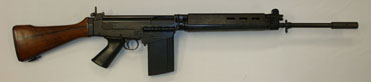
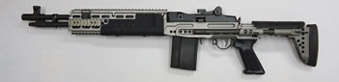
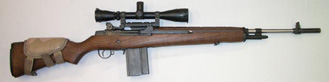
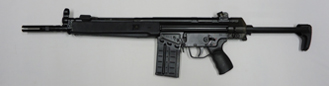
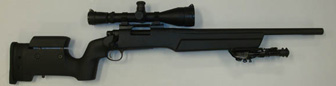
[sure, these historical to modern .308 rifles are neat; just senseless to pursue any wishes for
lots of repeat firing of .308 ammo if considering frequent shooting at 100yd limited distances.]
What next?
Instead of merely having such wide variety or eye candy in a gunshop and selling anything and
everything only to turnover inventory, I suggest items and thoughts that just don't follow masses.
Why try to chase elusive magic guns or gadgets? How about training physically and mentally to
improve and better ourselves and not fall prey to someone only wanting to make a sales quota?
With good choice purchases, other quality products can be easily budgeted and not overlooked.
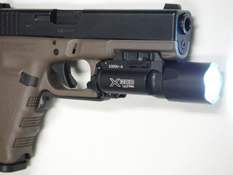
Important supplemental equipment
such as Surefire's dedicated lights
are easy to budget if avoiding junk.
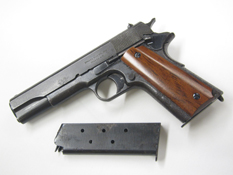
Quality items prioritized allow keen interest purchases like collectibles. |
How many want to be prepared? I'd like to think all of us...
And many of us love the outdoors... and effective tools!
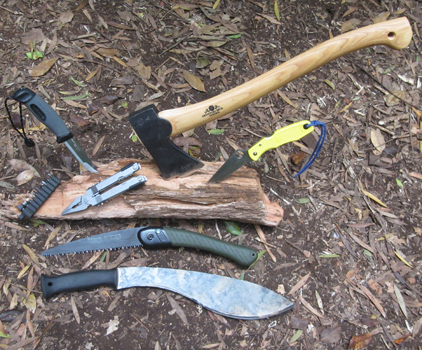
Preparedness (on knife page); remote location:
What supplemental tools should we have with us? |
Take care of the simple basic items first, then other secondary items can be obtained and enjoyed.
Make sure spare parts and supplemental supplies are secured before jumping off a focused track.
By all means, appreciate firearm history, get extra guns or have collections that catch your fancy -
just get the facts on what makes sense; what really does hold value if liquid assets are considered.
What should matter most to all gun owners? Build up the next person with ability and knowledge pertaining to guns and related equipment - with that, those around us will address the right issues, become an upstanding gun owner, be the very one to prevent an attack on one or several others;
preserving and improving our way of life with America's freedoms for future generations.
All kinds of handguns, each one touted to be the best...
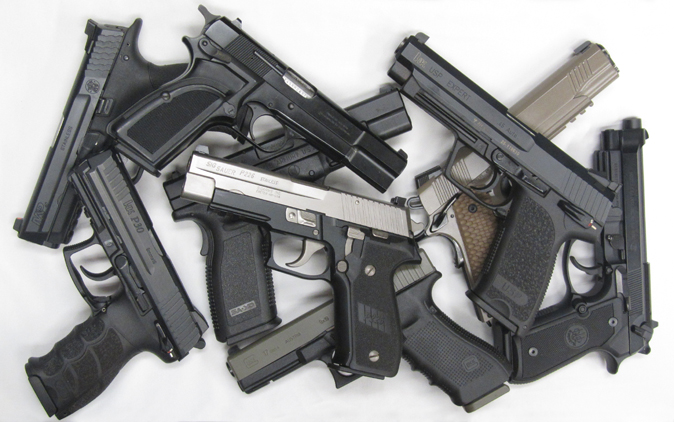
...so a $1,000 handgun is twice as good as a $500 handgun?
does it really matter on dollars spent or more the fighting ability of the user?
All kinds of rifles, each one claimed to be the ultimate...
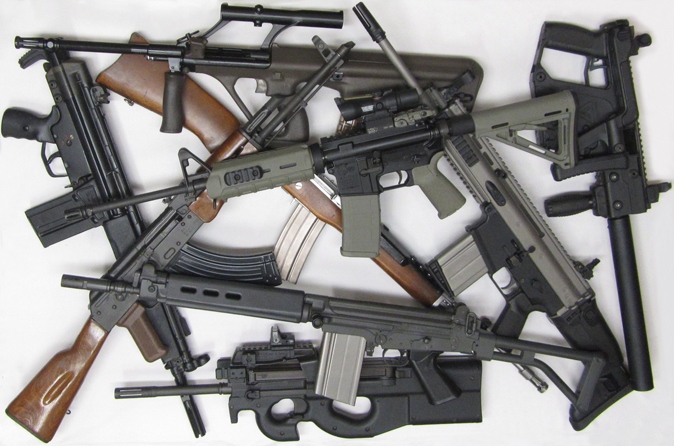
...are $2,000+ rifles twice as effective as one that is $1,000 or less?
fighting ability of the user AND needs/usage evaluation must be considered.
Here are serious reminders delivered in pictures and sensible facts
Everyone thinks of it, speaks of it - have we forgotten how important firearm ownership freedom is and how crucial it is to maintain our responsiblity and ability with such tools?
Many think themselves ready - are we? How about vast numbers of those who aren't?
Water/food/shelter is important, but other considerations include: defense - mindset -
clear thinking - capability - environment - and have nots that may become a liability.



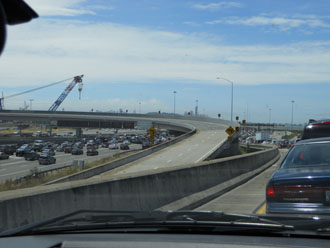


Many ask themselves 'what if..?' and discussions run every which way
Here is what everyone should consider, and recognize there is never enough time...
So plan and help each other so that more people will be prepared and less without
Let's get clear answers out in the open for the inevitable questions of useful tools.
Most can achieve firearms pictured in each category in a reasonable year or two.
Easier to attain when unnecessary additions or useless firearm models are avoided.
Yes, there will be disagreements and opinions. Think in practical terms.
Excessive additions or gadgetizing to proven basic firearms will only cause
delays/mistakes when one must pick up and utilize someone else's similar gun.
If you could only have three centerfire firearms to cover a broad range of tasks,
and have a secure location, which three would make sense? Also, cutting tools.
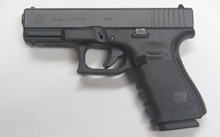
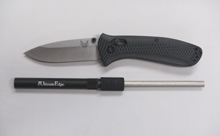
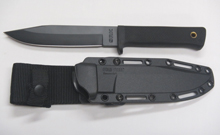
Glock 19 9mm Ultimate Edge sharpener Benchmade Ultra Presidio folder Cold Steel SRK fixed blade
Consider price and performance for their cost Commonality, availability, ease of use, proven track record
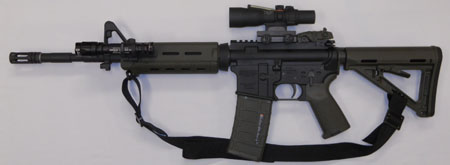
AR15 5.56 by any reputable manufacturer Surefire light Trijicon Compact 3x ACOG [reticle image]
ARs shoot consistently and are common, Surefires & ACOGs perform; that's why we should own them
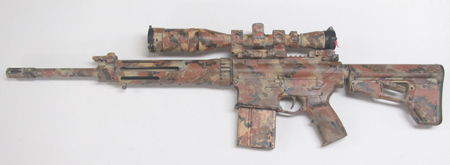
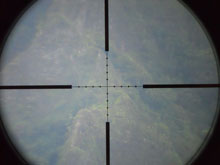
AR10 or equivalent 7.62x51 (.308) Leupold scope or equivalent 4-12x magnification [reticle image]
AR type .308s ideal for medium to far (300~600yds+) distances where 5.56 loses too much energy.
When one wants to teach others various handgun types commonly encountered
and needs to bring them up to speed quickly, efficiently in shortest possible time.
Which six covers most operating systems on limited firearm budget/safekeeping?
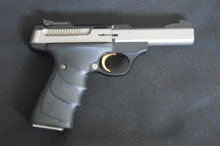
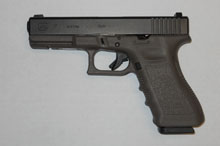
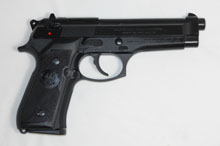
Browning Buckmark Micro 22lr Glock 17 9mm (DA striker fired) Beretta 92FS 9mm (DA/SA type)
Full-height frames are important. When teaching different people, full size guns offer more control.
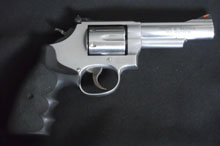
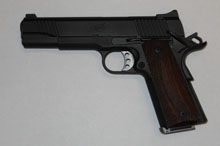
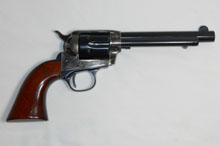
Smith & Wesson 66 DA .38/.357 Kimber/equivalent 1911 SA .45acp Taylor Co traditional SA .22cal
Double and single action revolvers are out there, all should know how to run these systems smoothly.
Which six semiauto military type rifles would be most commonly encountered
and might have to be utilized quickly and efficiently in time of need or crisis?
For one's ability to operate ANY firearm like second nature: (1) own the gun,
& (2) conduct purpose-driven training that pushes one past their comfort zone.
One cannot become skilled with a firearm just by reading about it, watching videos
or merely target shooting with a particular gun week after week in range mentality.
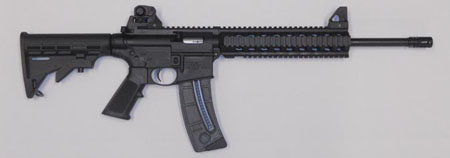 |
AR15 / M16 type 5.56 cal rifle:
Pictured is the best dedicated crossover rifle to fill the role of introducing AR15s to new shooters. S&W M&P15-22
has identical controls and is
very lightweight, building confidence faster for anyone starting/reviewing the system. |
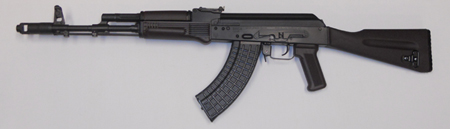 |
AK47 type 7.62x39 cal rifle:
Other variants with less recoil
are 5.45x39 caliber, which has
risen in costs over 7.62x39.
2015: 5.45x39 imported ammo continues to be tough to find;
may not be good to jump into. |
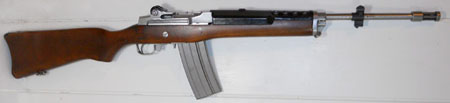 |
Ruger Mini14 .223 cal rifle:
Incredibly popular, originated
America's 'ranch rifle'; design limitations however can never approach shooting consistency of even the most basic AR15. |
|
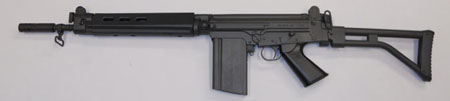
FN-FAL pattern .308 cal rifle:
Very common worldwide.
Heavy as all .308 military rifles would be, yet modern additions
to FALs improve capabilities
over original iron sight limits. |
 |
M1A / M14 .308 cal rifle:
Externally similar to Mini14 but
slightly different gas system.
Vastly consistent & repeatable accuracy over Mini14 design. |
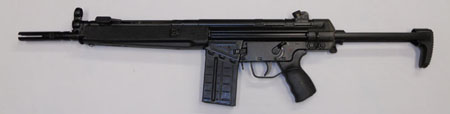 |
HK G3 pattern .308 cal rifle:
Many versions worldwide.
Most heavy for its size among .308 military rifles. Complex, costly & dirty roller-locked
bolt system. $$$, limited optic mounts/requirements not ideal. |
Other than single shot falling block or break-action type rifles,
what other types of rifles should everyone be familiar with?
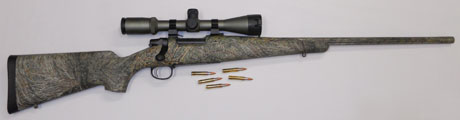
Bolt action rifles - Remington Model Seven shown above. Companies
Ruger, Marlin, Remington, Winchester, Browning, Savage, Mossberg...
different safeties, bolt removal/disassembly, optic mount requirements. |
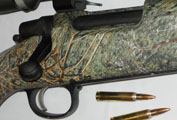
Different type/location of safeties. Floorplate types
can vary among bolt rifles. |
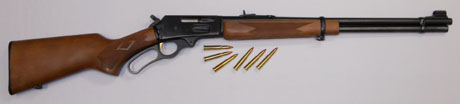
Lever action rifles - pictured is a Marlin 336. Marlin and Winchester
lead the numbers among many mfgs; some of similar design, some not.
Ex: Mossberg, Rossi, Puma, Uberti, Henry, Browning BLR, Ruger 96.
Differences between them include handling/loading and optic mounting. |
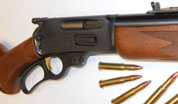
Most levers have reciever loading port, some at front. Earlier guns no safeties.
Many now have a safety. |
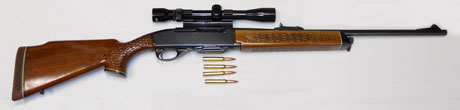
Semiauto or pump action, magazine-fed 'hunting type' rifles. Remington's
7400 semiauto series (currently model 750) and 7600 pump is popular.
Other common mfgs: Browning's BAR, Ruger's 44, Uberti's pump rifles. |
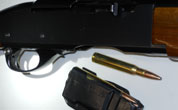
Detachable magazines or
tube-fed magazine types-
both have pros and cons. |
Ammunition: get some. Be sure to have your own comfortable inventory.
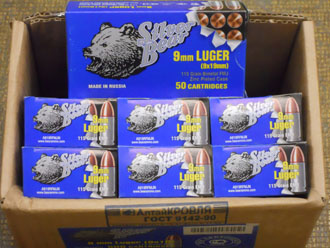
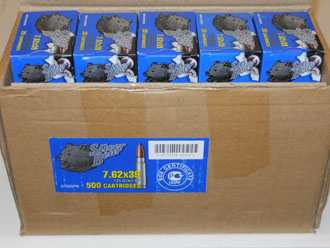
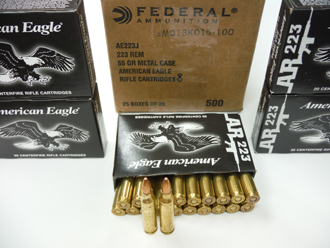
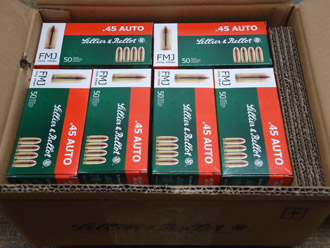
Have ammo. Use it, replenish it, always maintain a comfortable amount of your primary calibers.
It may be smart to maintain inventory of popular calibers you might not even have guns for yet.
One should have stock of .22lr, 9mm, .223/5.56, 7.62x39. .45acp and .308 may be good too.
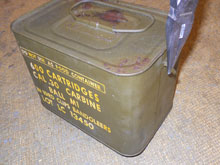
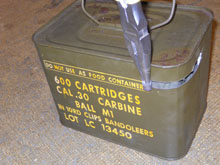
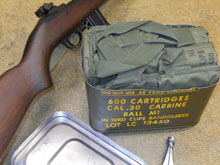
If you have decades-old ammo, start using it and replace it as you go. Brass weakens with 20+ yrs age.
Powders can deteriorate, loadings might be discovered weak/inconsistent/duds. Not good when needed.
Firearms, spare parts, magazines, ammunition, essentials -
Absolutely better to have and not need than to need and not have...
Something important to consider...
Got one?

|
Get Home Bags... set one up now!
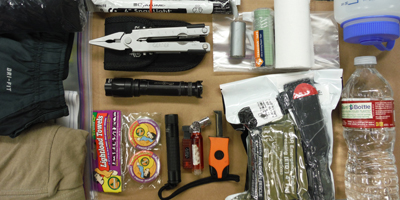
Any basic nondescript backpack or shoulder bag will do, remember that whatever minimal items you choose to
put in the bag will need to withstand a car's environment. Don't overload it; this bag may have to be carried a distance - just to get you home or a better location. |
Bug Out Bags will differ and may include more items depending on your plan/situation... |
Mountain House / Wise shelf-stable foods - crucial for emergencies
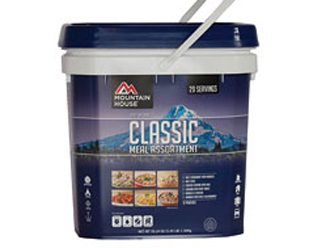
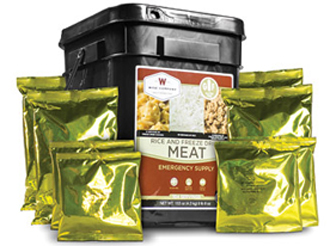
Mountain House / Wise buckets, various menus in pouches, $75 ~ $140 bucket.
Distributors I ordered these from on a regular basis before 2020 now don't inventory them.
Wise Entree pouches
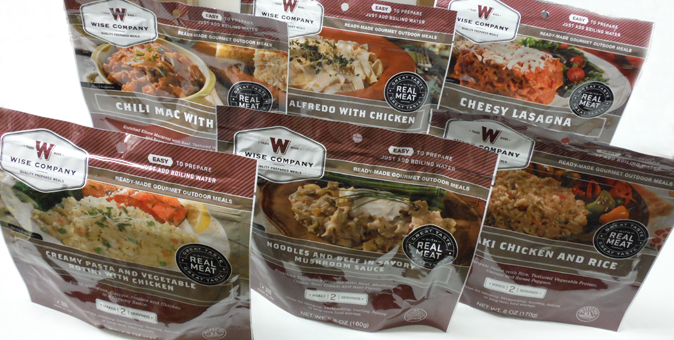
Wise Entrees, various 2 or 4 serving pouches, $5 ~ $8 each.
Distributors I ordered these from on a regular basis before 2020 now don't carry them.
Wise Foods 3 Day Weekender Kit
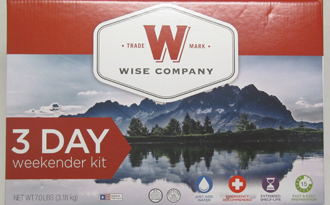
3 Day Weekender/Camp Kit $85 |
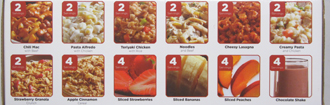
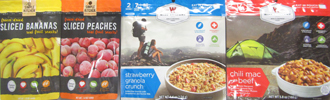
Many entrees, fruit, cereal, choc shakes |
Distributors I ordered these from on a regular basis before 2020 now don't carry them.
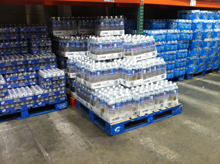
Get prepared.. set aside emergency necessities now, not during a situation!
How would you treat potential drinking water that could be questionable?
As equipment and time will allow, we can do the following:
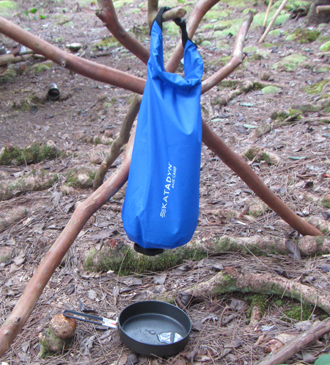
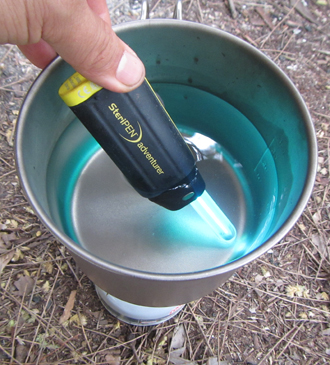 Katadyn filters solids/particulates, Steripen's UV step can stand-alone if necessary.
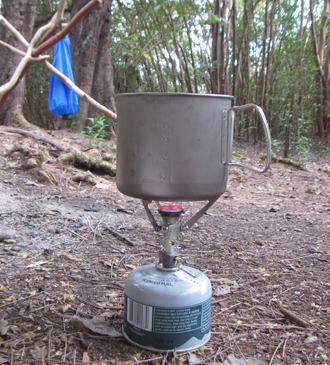
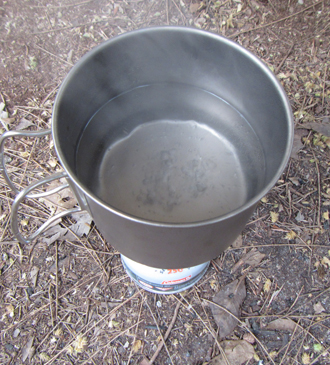
After filtration and ultraviolet steps, boiling then cooling produces wonderfully clean water.
MSR micro rocket stoves and several fuel canisters would be smart to have in your kit.
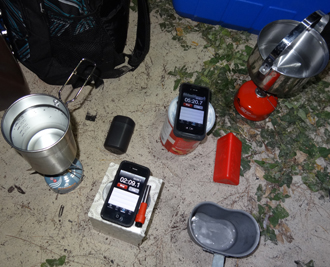
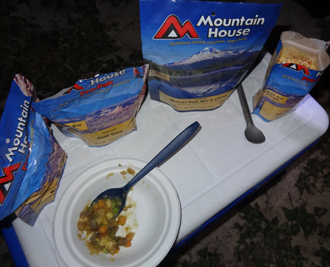
These MSR stoves thread into fuel canisters and have longer burn times than expected.
Be familiar with (and begin taste-testing) different 'just-add-hot-water' foods.
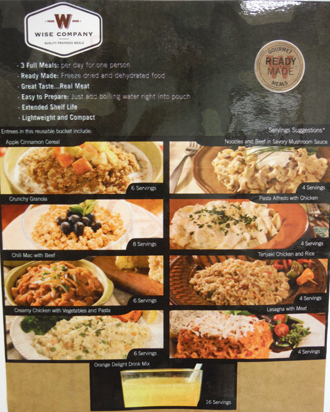
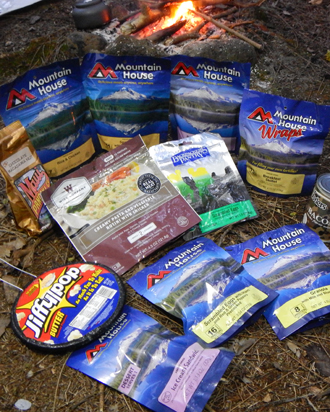
Wise and Mountain House are good to have. Supplemental food items
like Jiffy Pop makes "roughing it" much more fun and family friendly.
Streamlight Siege LED Lanterns
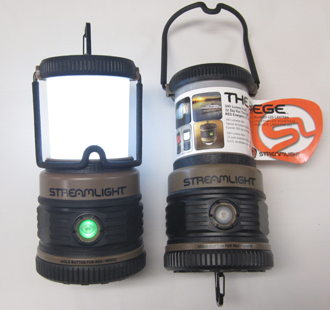
340 lumen D-cells $49.95 retail $72 |
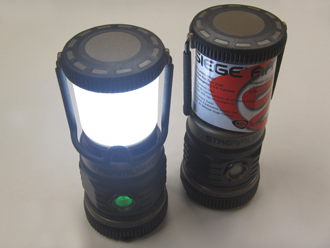
200 lumen AA-cells $36.95 retail $53
28592458908329889
All can hang upright or upside down
(handle on top and snap ring below)
Low/Med/High/Red/Red SOS modes |
Streamlight Siege USB rechargable LED Lanterns
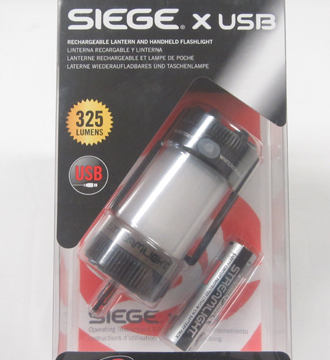
325 lumen rechargable $60 retail $80
|
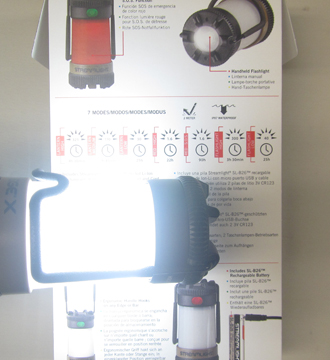
Low/Med/High/Red & flashlight modes
|
Blackhawk Range Bags
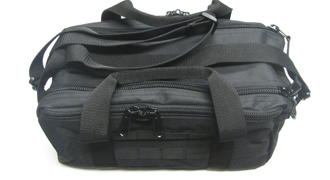
16"x9"x8" small range bag $49.95 |
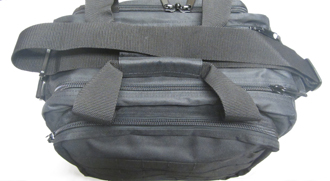
15"x11"x10" medium range bag $79.95 |
Gun Guard 4-Pistol / Accessory Hard Case
Dimensions: 16"x14"x5" Two levels with foam layers.
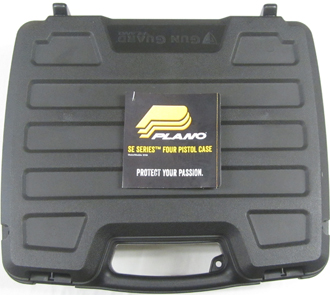
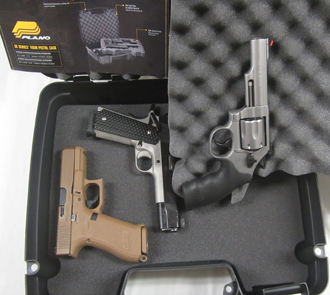
Fits 4 large pistols/revolvers, more if small-medium sized handguns are to be carried. $34.95
Plano MSR Hard Case
Economical longgun hard case without being typical 48" length which is unweildy.
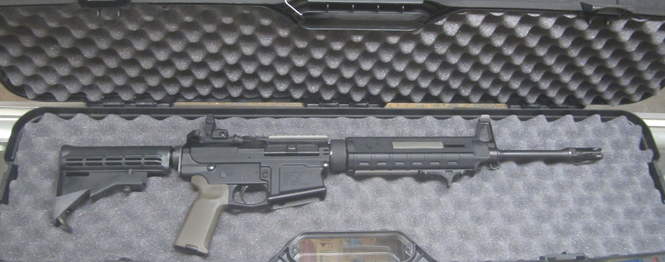
Dimensions: 40"x12"x4" Perfect for military sporting rifles w/ 16" to 18" barrels. $34.95
Individual Pistol Soft Cases
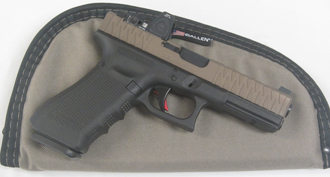
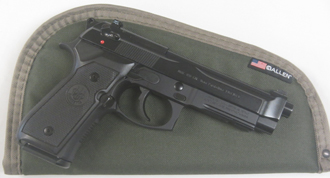
11", handgun zippered cases, assorted colors $10.95
Magazine Storage Pouches
Organize and store pistol magazines
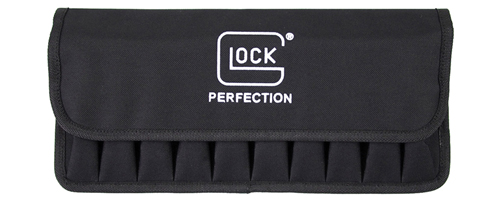
Glock's mag storage pouch accomodates up to 10 magazines $19.95
Closed Cell Foam Pistol Holder - 5 Handguns
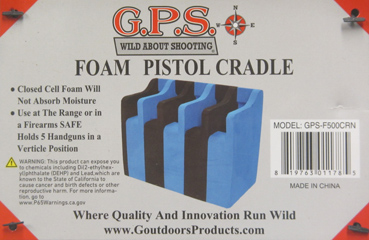
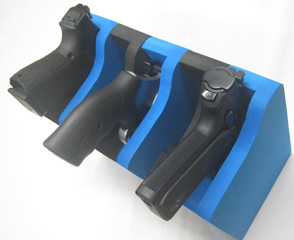
$22.95 [pictured: G19, empty, S&W Mod66, empty, Ruger MK4]
Closed Cell Foam Pistol Holder - 6 Handguns
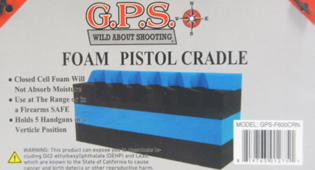
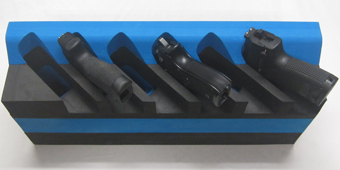
$24.95 [pictured: empty, TX22, empty, Beretta M9, empty, HK USP]
Soft Rifle Cases
Basic longgun case, various color combinations, no external pouches
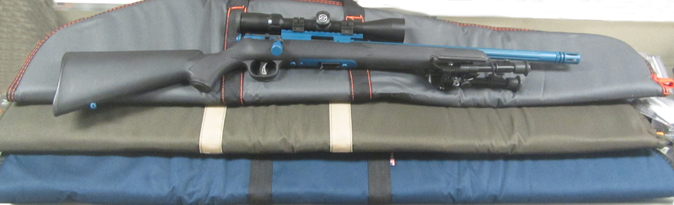
46", rifles with/without scopes or 45" overall length shotguns $19.95
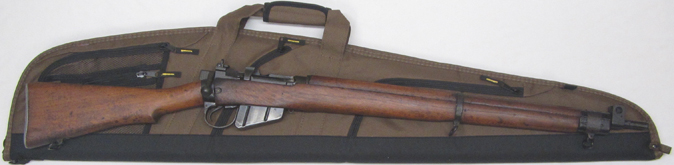
46" standard rifle/defense shotgun case, with 4 exterior zippered accessory pouches
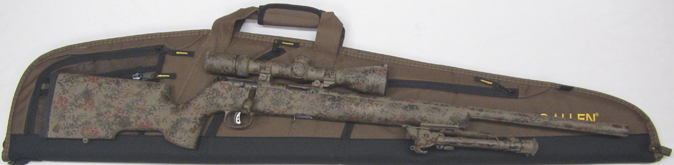
46" fits most bolt/lever/semiauto longguns, even with standard scopes. $41.95
Military rifle case with 2 exterior mag pouches and 2 accessory pouches.
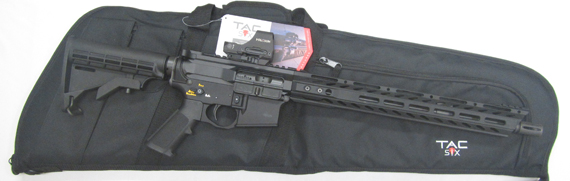
36" trim design for military type semiauto rifles minus standard or large scopes. $54.95
Military rifle cases with exterior mag pouches and 1 large outer zippered pouch
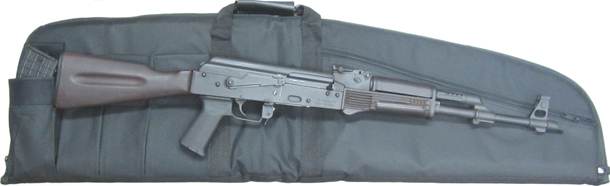
42", fits fixed stock AK-47s, most 20" AR-15s, full stock Mini-14s. $54.95
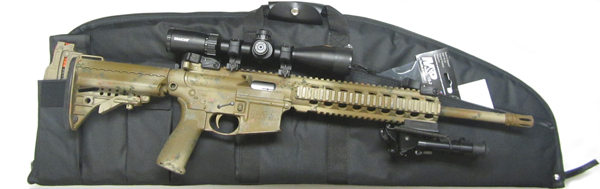
37", fits most 16" AR-15s, sidefolding/retracting stock rifles, bullpups. $54.95
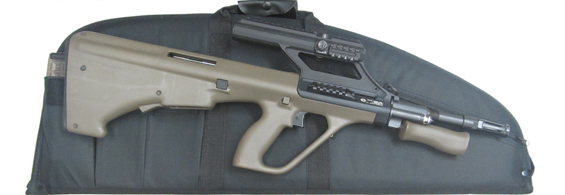
32" compact fit great for bullpup rifles. $54.95 ea
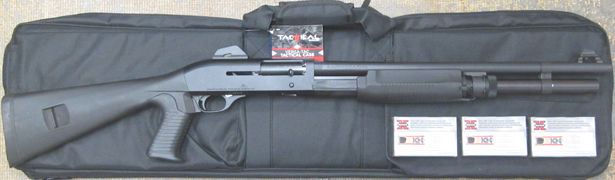
41" in length, two large exterior pockets with storage compartments
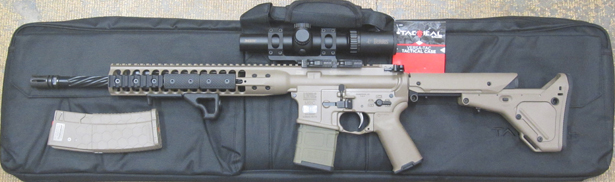
41" rectangular case - great versatility for a large softcase. $64.95
High Speed Gear mag pouches
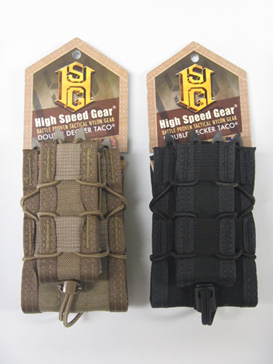
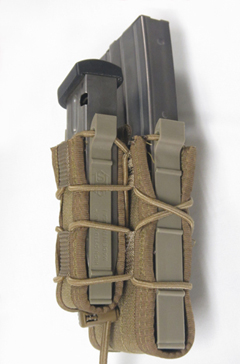
'Double decker Rifle & Pistol'
Most versatile of their lineup, rifle/pistol taco pouches keep 1 each close to your body,
are Molle-compatible, accommodate a variety of mags, even other equipment. $49.95
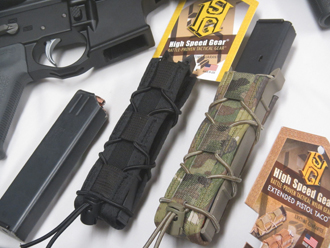
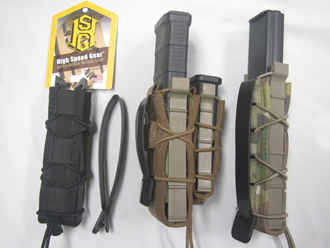
Pouches for extended Colt 9mm 20rd/32rd rifle mags. $37.95 ^ Various HSG pouches colt+double
Maxpedition RollyPoly dump pouches
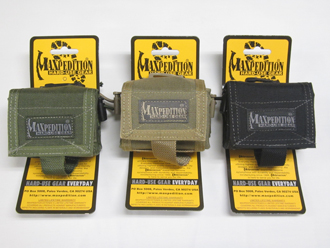
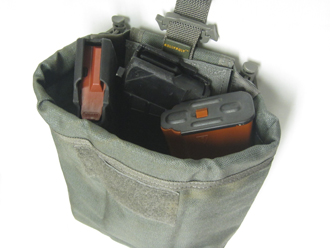
Often overlooked or forgotten: the dump pouch for empty/partial mags or even random items.
Can be stowed as a very compact item then opened and put to use, Molle-compatible. $29.95
More thoughts on DEFENSE guns and gear
Defensive Handguns and getting started in shooting - the simple truth
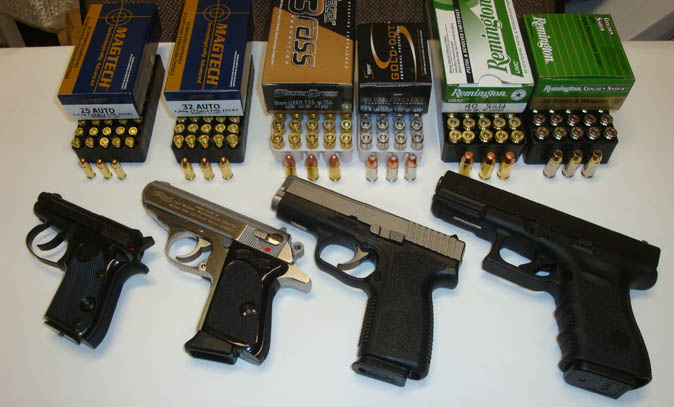
Why is there constant confusion about what to have in a self-defense semiauto handgun?
Above are examples of popular (tiny .25 is not best answer) handguns in several calibers.
Why would one use or expect a loved one to use a .25, .32, or .380 auto when it is clear
that 9mm caliber in a larger framed, easier-to-control handgun is truly advantageous?
For those who insist on "tiny is good enough", consider a motivated, aggressive attacker
ARMED with knives/guns and has caught you unaware in your home or confined space.
Now envision that attacker (or several) bent on taking your or other people's lives.
How effective is that tiny, stress-induced-forgot-how-to-use-this-cute-gun going to be?
Get a simple medium framed 9mm as a minimum caliber, get around progressive and
professional environments of true training and avoid stagnant and excessive plinking.
What's a simple semiauto? One where you insert mag, rack slide, and it is ready for use.
No external hammers, decocking/safety levers and/or two different trigger pulls.
Thankfully, simple is very attainable between $500~$700 with Glock leading the way.
Guns that have two different trigger pulls, decocking levers, safeties, sharp edges,
short frames that risk pinching skin on every magazine change and so on - WHY?
Small, heavy recoiling pistols should not be considered for defense especially if such
handgun is expected to be pressed into use by anyone who is apprehensive or fearful
of the gun, noise, managing its recoil or not having a decisive and aggresive mindset.
|
|
Proven track record handguns; med to lrg frames in
respectable calibers make more sense vs handguns
in small calibers with questionable stopping power.
Most cases, one can & should use 9mm minimum. |
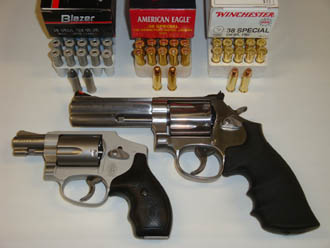
For home defense AND enjoyment when practicing;
which of the above is a more controllable revolver?
Which also builds confidence the more you shoot it?
Larger frame handguns provide more firing comfort. |
|
|
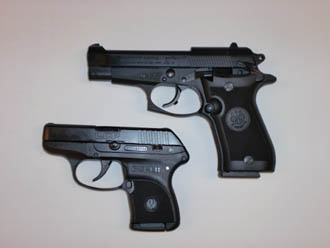
Both are .380 caliber; tiny Ruger LCP has more movement & less control during firing. Beretta 85F
has a smoother firing characteristic and less recoil.
No mystery why; larger handgun, more mass, taller frame to fit the majority of hands securely. |
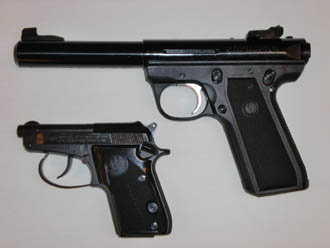
Both are .22 LR; yet the best choice for introducing handguns to those interested in learning firearms,
target shooting, building confidence - Ruger MK III
is a versatile and smart choice. Beretta 21A is too small. It honestly can not fill the role of a target gun. |
What really is practical and effective for target shooting; for defense use?
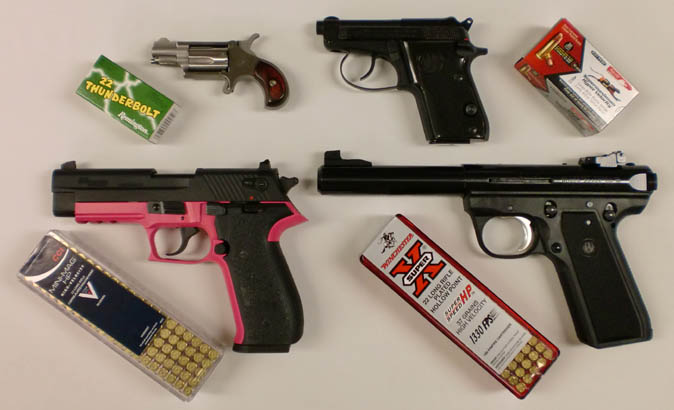
Having a variety of .22 handguns is ok, but most enjoyable & practical in picture above would be the
bottom two: a Sig Mosquito and Ruger MK III. However, Sig Mosquitos have always been ammo-
sensitive, requiring pricier types of .22 while Ruger's offering can take a wider variety of .22 ammo.
In defense situations, solid hits with .22 ammo is certainly better than misses with any larger caliber...
Secure, full-framed aggressive grip is better than an unsecure grasp of a tiny-framed gun for defense.
A controllable 9mm semiauto is a better idea than pushing someone to fire .357mag or .45acp.
Forcing anyone to proceed too quickly with snappy/heavy recoil/larger caliber defense handguns
is not a good idea; having confidence and familiarity of the chosen gun/caliber is the right answer.
Make it 'very easy' for the fun afternoon of plinking. Getting new shooters to enjoy
firearms from the first minute on a firing line is crucial. Always start with .22 caliber.
It may be better to get new shooters hitting targets easily first, then learn iron sights.
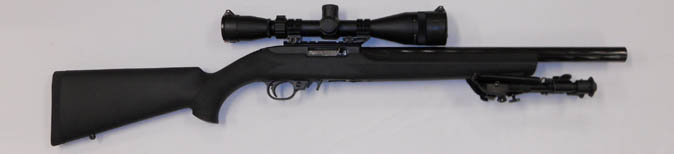
If it seems like cheating, so be it! Shown on the popular Ruger 10/22 .22 semiauto rifle,
a scope that magnifies target image and has crosshairs as an aiming point makes sense!
Building confidence and acclimating new shooters with .22 rifles & handguns is smart.
Do that before continuing on to defensive calibers and new shooters build skills faster.
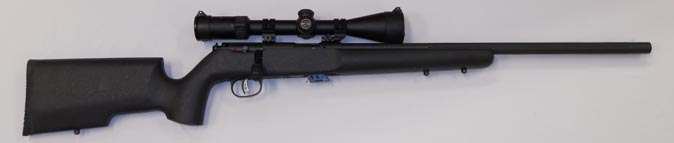
Very fun and rewarding shooting with a cost-effective Savage MK-II .22 bolt action rifle -
with a 3-9x or 4-12x magnified scope, new and seasoned shooters can build and review
trigger control and 'follow-thru'; fundamentals that must be revisited for consistent results.
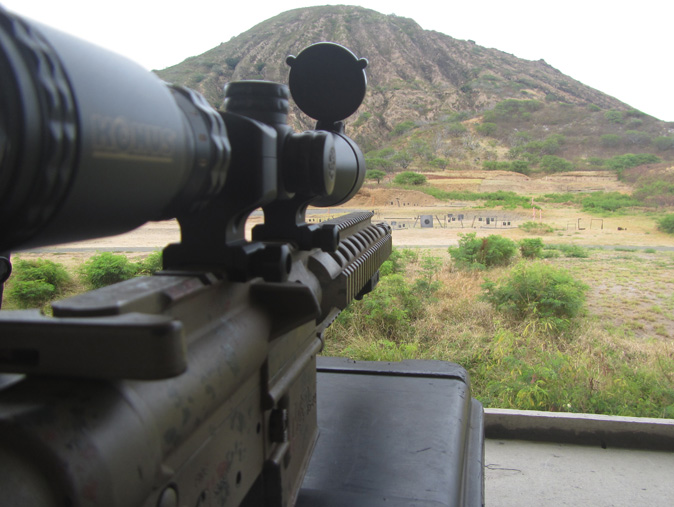
Confidence builder: firing .22 rimfire out to 100 yards at Koko Head Silhouette Range.
Rifle: S&W M&P15-22 with Konus 3-9x40 optic mounted in Warne AR flattop rings.
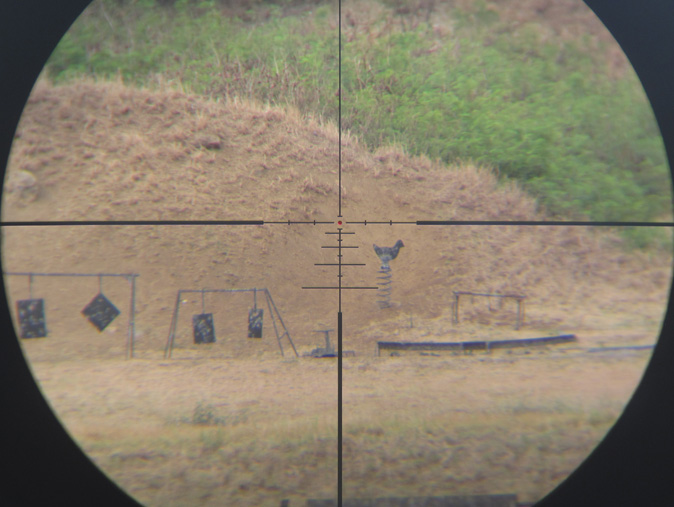
This scope's reticle has holdover stadia marks helping to hit small targets at distance.
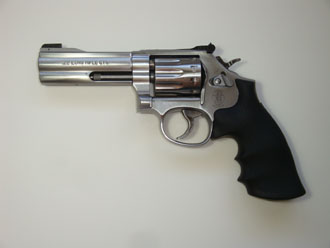
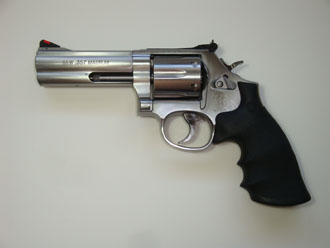
(Smith & Wesson) 4" revolver in .22 then moving on to a same frame/weight .38 special
with a 4" barrel is a better method versus starting off with .38 special or .357 magnum!
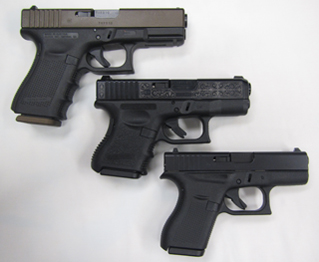
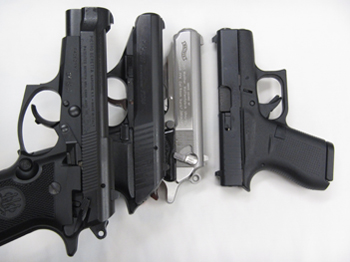
Glock 19 9mm, Glock 26 9mm, Glock 42 .380 .380s: Beretta 85F, Sig P230, Walther PPK, Glock 42
Diminutive defense guns should be a minimum of .380, and pocket pistols sure get small.
(Balance of defense platform and caliber often overlooked; ability to grasp and hang onto small pistols)
True, any bullet in a vital zone might stop an attacker, but should we risk more by betting on such odds?
Since most are physically capable of firing a 9mm Glock 19 sized like the 85F; use a Glock 19 instead!
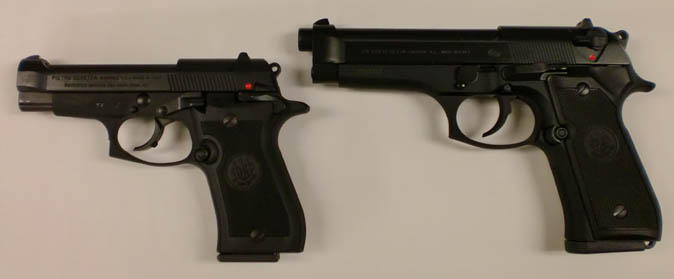
Where's the defense gun to be kept and who is expected to know how to use it?
(left) Beretta 85 has a different operation of control lever than Beretta 92 (right)
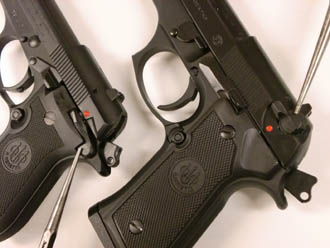
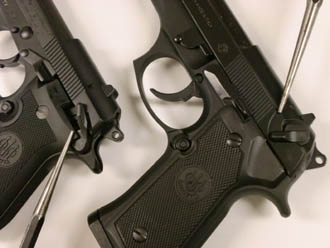
As an important note; these Beretta handguns have controls in their manual-of-arms
that must be understood and operable by user without hesitation or second thought.
Beretta 85 decocking lever must be moved up to lower hammer and select 'safe'.
Beretta 92 decocking lever must go down to lower hammer and select 'safe'.